Artificial Intelligence has quietly become part of daily life. Whether someone searches for AI meaning, AI descriptions, or wants to know what does AI mean, the curiosity is always the same. People want a simple explanation of how this technology works and why it matters. This guide explains what AI stands for, how artificial intelligence works, and the purpose of AI, using clear and natural language.
What Does AI Mean
AI stands for Artificial Intelligence, a term used when machines can perform tasks that usually need human thinking.
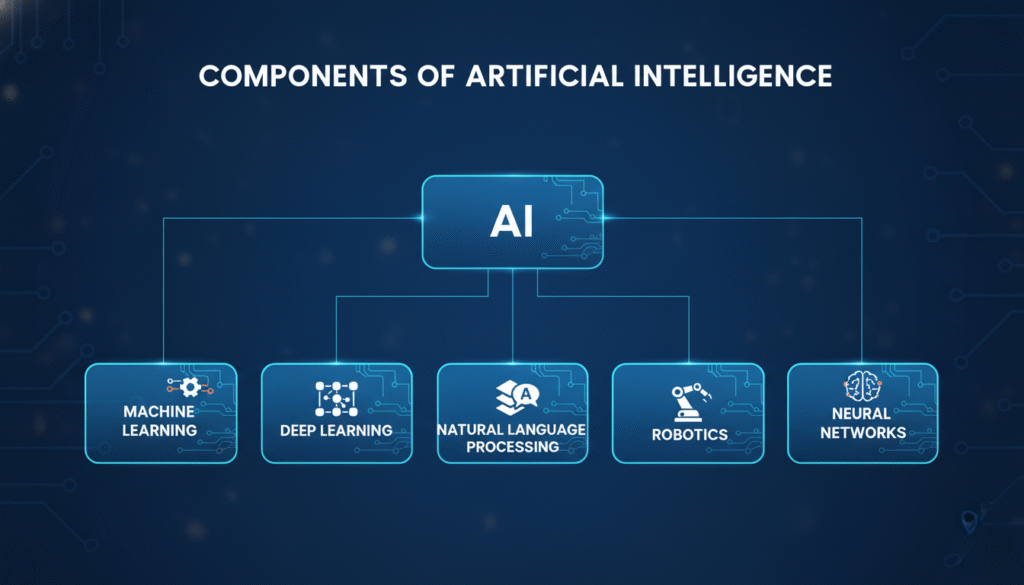
AI meaning in simple words
AI is the ability of computers to learn from information and make decisions without being told exactly what to do each time. When someone asks what exactly is AI, the easiest explanation is that AI is smart machine behavior.
What AI stands for
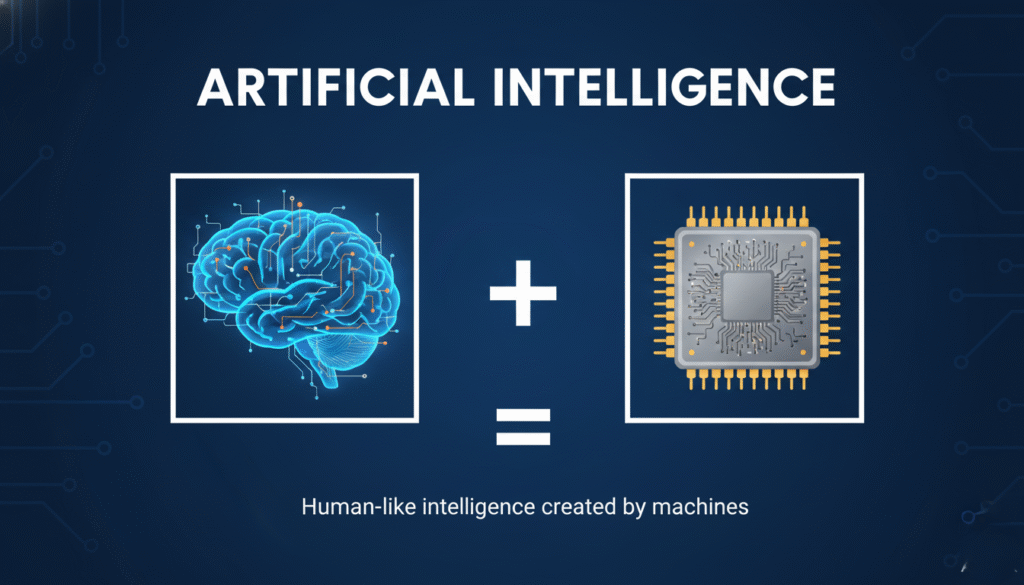
Common searches like what does A I stand for or what does AI stand for point to one answer.
Artificial. created by humans
Intelligence. the ability to understand and make decisions
Automated intelligence and alternative intelligence
Some use terms such as automated intelligence or alternative intelligence, which also describe machine-based decision systems.
Short paragraph on artificial intelligence
Artificial Intelligence is technology that allows machines to process information, learn from patterns, and solve problems. It helps systems understand images, language, and behavior.
What Exactly Is Artificial Intelligence
Many people search for what do you know about artificial intelligence or what exactly is AI and how does it work. AI is a key part of computer science that focuses on creating intelligent systems.
AI in computer science
When someone searches for AI computer science, they are referring to the study of machine learning, neural networks, data processing, and intelligent models.
What AI does
AI can
- recognize images
- understand speech
- translate languages
- predict outcomes
- automate tasks
Understanding artificial intelligence
AI works by learning from examples. Machines observe patterns, improve over time, and then make better decisions.
How Artificial Intelligence Works
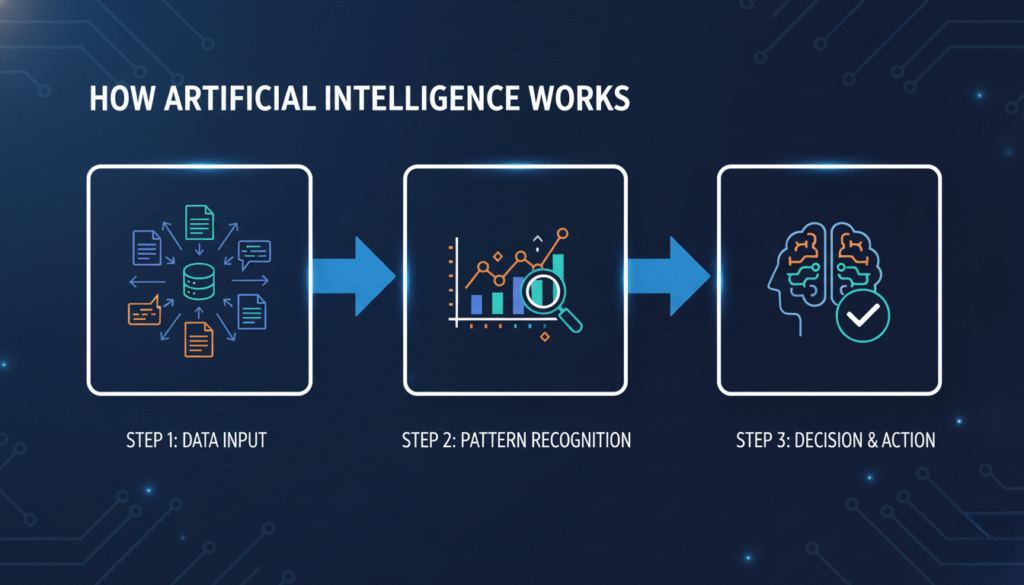
Search queries like how artificial intelligence works and how does artificial intelligence work show how many people want a simple explanation. AI follows three core actions.
Data collection
The system receives information in the form of text, images, audio, video, or sensor data.
Pattern learning
AI studies the information and identifies patterns. This process is at the heart of artificial intelligence techniques like machine learning and deep learning.
Decision making
After training, the system uses the learned patterns to respond or make predictions.
Simple example
If AI is shown thousands of photos of apples and oranges, it slowly learns their differences. When a new photo appears, the system can identify it correctly.
Types of Artificial Intelligence
Narrow AI
Used in most modern tools. It performs one task very well.
General AI
A future idea where machines think broadly like humans.
Superintelligence
A theoretical level where machines surpass human intelligence.
AI Technology Used Today
People often search AI technology, what is A I technology, or new AI to understand modern trends.
AI software
- Chatbots
- Content tools
- Image generators
- Voice assistants
Modern AI technology
Includes smart cameras, recommender systems, robots, and predictive analytics.
New AI innovations
AI systems can now generate images, code, videos, and music. This is why new AI continues to rise in search trends.
What Is the Purpose of AI
Searches like what is the purpose of AI reflect growing interest in why AI exists.
Why AI was created
AI was developed to help humans solve complex problems and work faster.
Benefits for individuals and businesses
- Saves time
- Reduces errors
- Improves accuracy
- Automates repetitive tasks
- Enhances decision making
Artificial Intelligence in Everyday Life
Millions of people search what does AI do or want examples of computers with AI use human intelligence to make decisions. AI is already all around us.
Everyday examples
- Face unlock on phones
- YouTube recommendations
- Google Maps routing
- Email spam filtering
Industry uses
- Healthcare scans
- Financial fraud detection
- Retail personalization
- Security surveillance
Human-like decision making
AI does not feel emotions, but it makes logical decisions based on data patterns.
Benefits and Limitations of AI
Benefits
- High speed
- Accurate processing
- Works without fatigue
- Handles big data easily
Limitations
- No emotions
- Dependent on data
- Can reflect human bias
- Needs human supervision
Ethical concerns
- Job loss in repetitive roles
- Privacy issues
- Data misuse risks
Future of Artificial Intelligence
Searches like artificial intelligence theory and new AI show interest in where technology is heading.
The future
- More natural digital assistants
- Smarter home devices
- Safer self-driving systems
- More realistic AI-generated content
Human role
Humans will remain essential for creativity, emotional decisions, and ethical judgment.
Conclusion
Artificial Intelligence is shaping how the world works. When you understand AI meaning, what AI stands for, and how artificial intelligence works, it becomes easier to use this technology wisely and confidently. AI is not replacing humans. It is helping us work smarter and faster.
Frequently Asked Questions
What is AI in simple words
AI is technology that helps machines learn from information and make intelligent decisions.
What does AI mean
It means machine-based intelligence that allows systems to act smart.
What does AI stand for
AI stands for Artificial Intelligence.
What does A I stand for
It also stands for Artificial Intelligence.
How artificial intelligence works
AI learns from data, recognizes patterns, and makes predictions or decisions.
What is A I technology
It refers to smart software and tools that perform tasks using machine learning and advanced algorithms.
What exactly is AI and how does it work
AI is a machine trained with data. It works by learning patterns and responding based on what it has learned.
What is artificial intelligence in simple words
It is the ability of machines to understand information and solve problems like humans.
What is the purpose of AI
The purpose is to automate tasks, improve accuracy, and help humans work more efficiently.
What does AI do
AI analyzes information, predicts outcomes, automates jobs, and improves decision making.