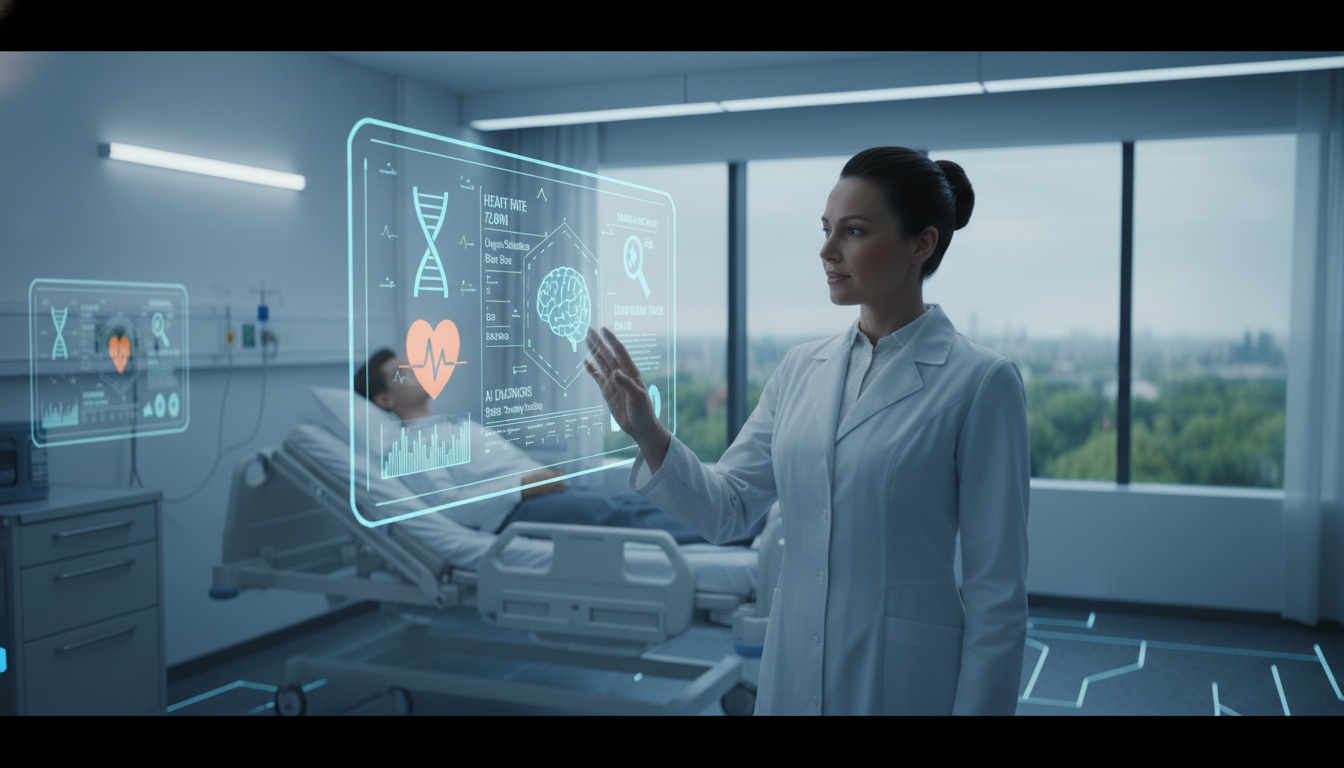
AI in healthcare is becoming a major driving force behind modern medical transformation. Hospitals and clinics are shifting toward digital systems because artificial intelligence improves diagnosis accuracy, reduces workload and enhances patient care. The AI market in health care continues to grow as more healthcare providers adopt advanced tools. Doctors now use AI powered systems for faster decision making. This shows how is ai helping doctors in real time.
AI in health is no longer an emerging concept. It is a practical and essential part of the healthcare ecosystem.
What is Artificial Intelligence in Healthcare
Artificial intelligence in healthcare refers to the use of advanced algorithms and machine models to support clinical tasks. These models learn from medical data and improve over time. AI and machine learning in healthcare help with image analysis, risk prediction, treatment suggestions and workflow automation.
Artificial intelligence used in healthcare is different from regular AI because it focuses on medical accuracy and patient safety. AI in healthcare industry relies on deep learning, computer vision and natural language processing to manage sensitive health data and assist medical teams.
Why AI Matters in Modern Healthcare
Healthcare faces challenges such as staff shortages, rising patient load and slow diagnostic processes. AI impact healthcare by improving accuracy, reducing errors and speeding up treatment planning. This helps patients receive better care.
AI will affect the healthcare industry by shifting manual tasks toward automation. Doctors get more time for patient interaction while AI handles repetitive activities. As a result, hospitals become more efficient and reliable.
Core Applications of AI in the Healthcare Sector
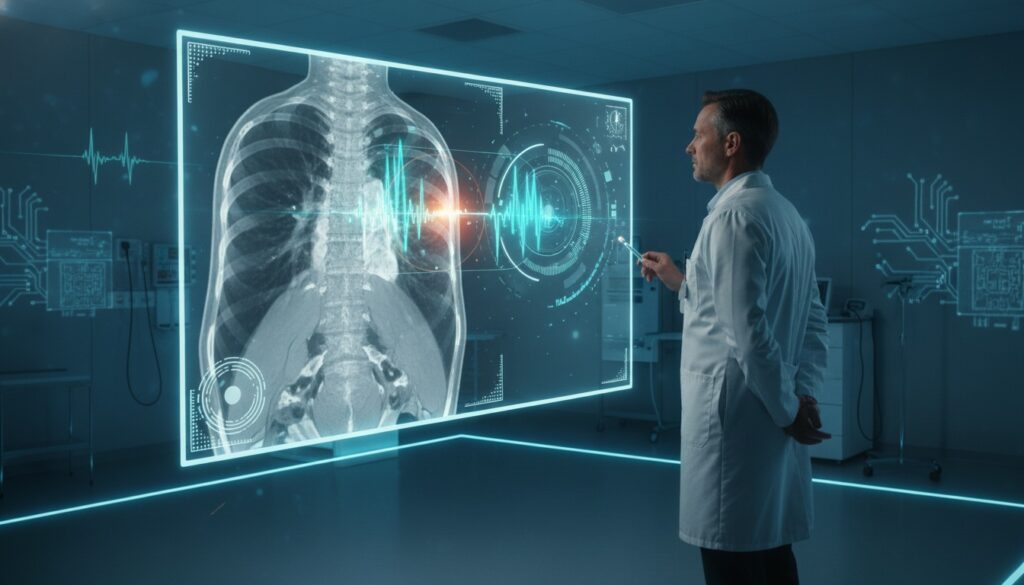
AI applications in healthcare cover diagnosis, imaging, patient monitoring, surgery and drug development. The AI application healthcare sector continues to expand because healthcare demands faster and more accurate results.
Diagnostics and Disease Detection
AI systems detect diseases like cancer, heart issues and diabetes with high accuracy. This makes AI applications in healthcare extremely valuable. Early detection is one of the strongest ai use cases in healthcare.
Treatment Recommendations and Clinical Decision Support
AI in health care platforms study symptoms, history and medical patterns to recommend treatment options. Doctors use these suggestions to improve decision making without relying completely on automation.
Medical Imaging and Radiology Automation
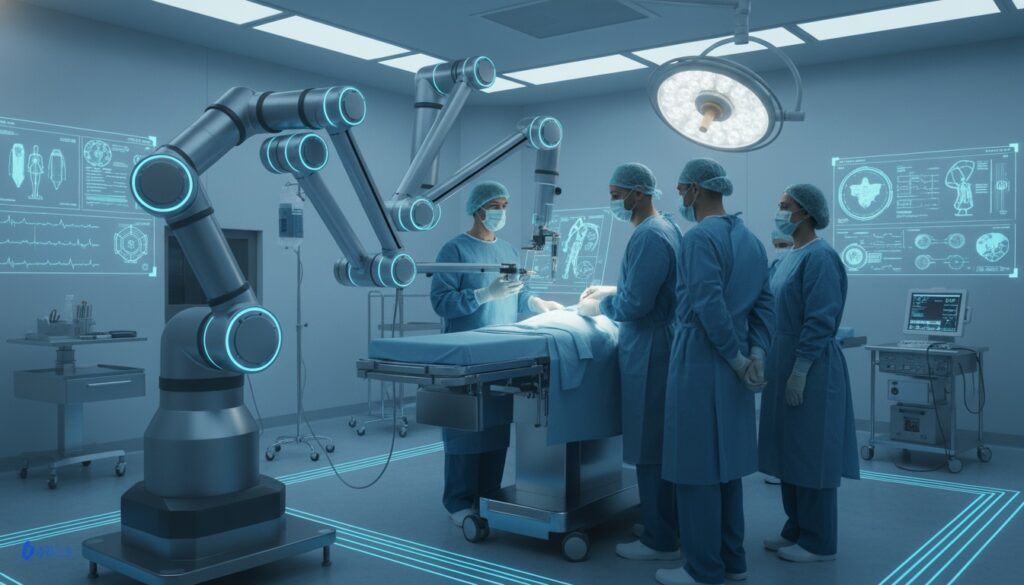
AI in medical field helps radiologists identify abnormalities quickly. It scans MRI, CT and X ray images and highlights possible issues within seconds. This reduces human error and speeds up reporting time.
Robotic Surgery
Robotic surgeries guided by AI offer precision and stability. Surgeons benefit from real time support which improves patient recovery.
Drug Discovery and Development
AI reduces drug development time by predicting molecule behavior. Machine learning helps identify compounds that could become effective medicines.
Remote Monitoring and Smart Devices
AI health devices and wearables track heart rate, blood pressure and glucose levels. When unusual patterns appear, AI sends alerts to doctors. This makes long term care safer.
Virtual Health Assistants and Chatbots
AI assistants answer questions, schedule appointments and provide basic guidance. This reduces waiting time and helps hospitals manage patient flow.
Administrative Automation in Hospitals
AI solutions in healthcare automate billing, insurance approvals and record management. This reduces the burden on staff and avoids manual mistakes.
Predictive Analytics in Healthcare
Predictive analytics powered by AI forecasts health risks before symptoms appear. This helps prevent severe complications.
Collaboration Tools for Healthcare Providers
AI and collaboration between healthcare providers improve communication. Doctors share reports, treatment plans and medical images quickly which leads to better decisions.
Real Examples of Artificial Intelligence in Healthcare
There are many powerful AI in healthcare examples. Pathology labs use AI to scan tissue slides. Emergency departments use AI to categorize cases based on severity. Companies like Google DeepMind Health and IBM Watson Health continue to create tools that support artificial intelligence in healthcare.
These examples of artificial intelligence in healthcare show how advanced the technology has become.
Benefits of AI in Healthcare
The benefits of ai in healthcare are impressive. AI improves diagnosis accuracy, reduces human error and speeds up medical processes. This increases patient safety and reduces treatment costs.
The positives of artificial intelligence on medicine include personalized care, smoother workflows and better outcomes. The pros of ai in healthcare are visible in radiology, surgery, diagnostics, telehealth and patient monitoring.
How AI Helps Doctors and Medical Professionals
AI supports doctors by analyzing medical images, predicting patient risks and suggesting treatments. This demonstrates how is ai helping doctors in daily procedures. It also explains how could doctors use ai to manage complex cases with more confidence.
AI reduces manual work which allows doctors to focus on patient care.
Trends and Future of AI in Healthcare
Artificial intelligence trends in healthcare include smart hospitals, robotic care, AI powered diagnostics and personalized treatment. Telehealth and virtual care will continue to grow as AI becomes more advanced.
Future of ai in healthcare will include real time monitoring, predictive care engines and automated clinical centers. Data privacy and ethical guidelines will also shape how AI evolves.
Challenges and Limitations of AI in Healthcare
AI depends on accurate data. If the data is incorrect, AI results may be unreliable. Hospitals may face high implementation costs and staff may require training to use AI tools effectively.
Privacy, legal responsibility and ethical concerns must also be addressed before adopting artificial intelligence in health care on a large scale.
Credible Real-World Examples of AI Used in Healthcare
1. FDA-Approved AI for Diabetic Retinopathy Screening (United States)
AI is used to detect diabetic retinopathy without the need for an eye specialist. The FDA approved an autonomous AI system called IDx-DR that can analyze retinal images and instantly tell whether a patient has diabetic eye disease.
This system is already operating in multiple U. S. primary-care clinics and has helped increase early detection rates.
2. AI-Assisted Radiology for Chest X-Rays (United Kingdom. NHS)
The National Health Service (NHS) in the UK uses AI tools to read chest X-rays and flag more than 100 possible conditions such as lung cancer, pneumonia and collapsed lung.
These AI systems help radiologists read images faster and reduce reporting delays in overloaded hospitals.
3. AI-Driven OCT Eye Scan Analysis at Moorfields Eye Hospital (UK)
Moorfields Eye Hospital partnered with Google DeepMind to develop an AI system that reads Optical Coherence Tomography (OCT) eye scans.
The model identifies serious eye conditions such as macular degeneration with accuracy comparable to senior ophthalmologists.
It also recommends which patients should be treated urgently.
4. AI Predictive Models for Sepsis Alerts in Hospitals (United States. Major Health Systems)
Large U. S. hospital networks use AI models that analyze vital signs and lab data to predict sepsis hours before symptoms appear.
These early warnings help doctors start treatment sooner which has been linked to reduced mortality and fewer ICU admissions.
5. AI-Powered Wearable ECG Analysis for Early Heart Disease Detection (Global. Used in US & Europe)
Wearable devices like the Apple Watch and similar ECG-enabled wearables use AI algorithms to detect atrial fibrillation and possible abnormal heart rhythms.
Clinical studies have shown that AI-driven interpretation of ECG data can detect structural heart issues with high accuracy, enabling earlier diagnosis and treatment.
Conclusion
AI in healthcare is transforming how doctors diagnose, treat and manage patient care. It increases accuracy, reduces errors and improves outcomes. Artificial intelligence in health care will continue to grow and become a natural part of every hospital. AI makes healthcare more advanced, more predictive and more patient focused. The future of AI in medicine looks promising.
FAQs About AI in Healthcare
What is the best example of AI in healthcare
Some of the most effective AI in healthcare examples include AI driven imaging analysis, robotic surgery, predictive analytics and virtual health assistants.
How is AI used in healthcare today
AI is used for diagnostics, medical imaging, patient monitoring, decision support, telehealth and administrative automation. These AI applications in healthcare improve speed and quality of care.
What are the benefits of AI in healthcare
The benefits of ai in healthcare include fewer errors, faster diagnosis, lower costs, predictive care and improved doctor efficiency.
How is AI helping doctors
AI analyzes scans, highlights patterns in medical history and supports treatment decisions. This shows how is ai helping doctors in hospitals and clinics.
How could doctors use AI in the future
Doctors could use AI for fully automated diagnostics, advanced robotic surgeries, personalized medicine and continuous real time monitoring.
What are the main ai use cases in healthcare
The main ai use cases in healthcare include diagnosis, radiology, predictive analytics, surgery, hospital automation and telemedicine.
Is AI used in the medical field safely
Yes. AI in medical field is safe when hospitals follow privacy rules and clinical validation guidelines.
Will AI replace doctors
AI will not replace doctors. It will support them by handling repetitive tasks and improving accuracy.
What is the future of AI in healthcare
The future of ai in healthcare includes AI powered hospitals, automated diagnosis centers, personalized treatments and advanced monitoring systems.
How will AI affect the healthcare industry
AI will affect the healthcare industry by improving speed, accuracy, cost savings and patient satisfaction.
Is AI helpful for remote monitoring
Yes. AI health devices help track vital signs and alert doctors when changes appear.
What are the challenges of artificial intelligence in healthcare
Challenges include cost, data accuracy, privacy issues, legal concerns and training requirements.